SCID closes the gap between SNCR and SCR.
Equipment on the scale of an SNCR – for plants where SNCR has reached its limits and SCR does not fit, technically or economically. Ammonia is activated chemically, by an additive matched to the flue gas, without a solid catalyst.
effective at lower temperatures than SNCR, optimum 600–780 °C
SNCR + SCID at a cement plant, from 400 to 200 mg/Nm³
used as a resource for denitrification
tested at industrial scale and listed by INCITE, the European Commission’s platform for emerging techniques
Where do you stand?
Your SNCR is reaching its limits.
New emission limits, rising reagent consumption or NH3 slip – and an SCR fits neither the plant nor the budget.
When SCID is an option → Authorities and expertsYou are assessing a new process.
Working principle, measurement basis and classification are covered in the documents; I am happy to answer technical questions.
To the documents → Plant engineering and partnersYou want to help implement SCID.
SCID is delivered through project partnerships. Anyone who can build an SNCR can also build SCID.
To the partnership →When SCID is an option for your plant
It is usually one of these situations. We go through them with you in the initial consultation.
The SNCR cannot meet new or tighter limits – or only with considerably more reagent.
Ammonia slip from the SNCR puts compliance at risk.
The temperature in the possible injection zone is too low for SNCR, or injection would go straight into the flame.
Catalyst poisons, dust or the process itself argue against SCR.
Space, sizing or economics cannot support an SCR including upstream gas cleaning.
An existing SCR should run longer between catalyst replacements.
Same reaction, different trigger
Every ammonia-based denitrification needs a trigger so that the ammonia reacts with the nitrogen oxides. The processes differ in where this trigger comes from.
by heat
Works from about 800 °C. Simple and economical – as long as conditions at the injection point are right.
by an additive
An additive matched to the flue gas is injected together with the ammonia and activates it chemically. The reaction takes place within milliseconds.
by a catalyst
Highly effective, but needs a large catalyst surface, often upstream gas cleaning, and considerably more space and investment.
What SCID does
SCID reduces nitrogen oxides in the flue gas.
SCID breaks down ammonia in the flue gas, for example the slip from an SNCR.
The additive eqinox is matched to the task, the plant and the flue gas composition.
SCID works on its own or together with an SNCR or SCR.
What has been measured
Two references in regular operation, both kept anonymous. Stack values are taken from the operators’ emission reports.
Cement plant
In combined SNCR + SCID operation, residual NOx was halved from 400 to 200 mg/Nm³ – in the first test and in heavily dust-laden flue gas. SCID alone achieved 25 % lower residual NOx than SNCR with 37.6 % less ammonia.
Hazardous waste incineration
At almost four times the SNCR dosing, ammonia slip with SCID stayed close to its baseline (raw NH₃ upstream of the scrubber), with no limit values exceeded.
Detailed measurement data and evaluation: request the white paper.
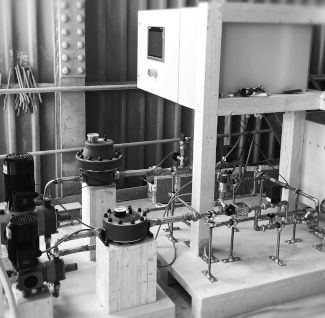
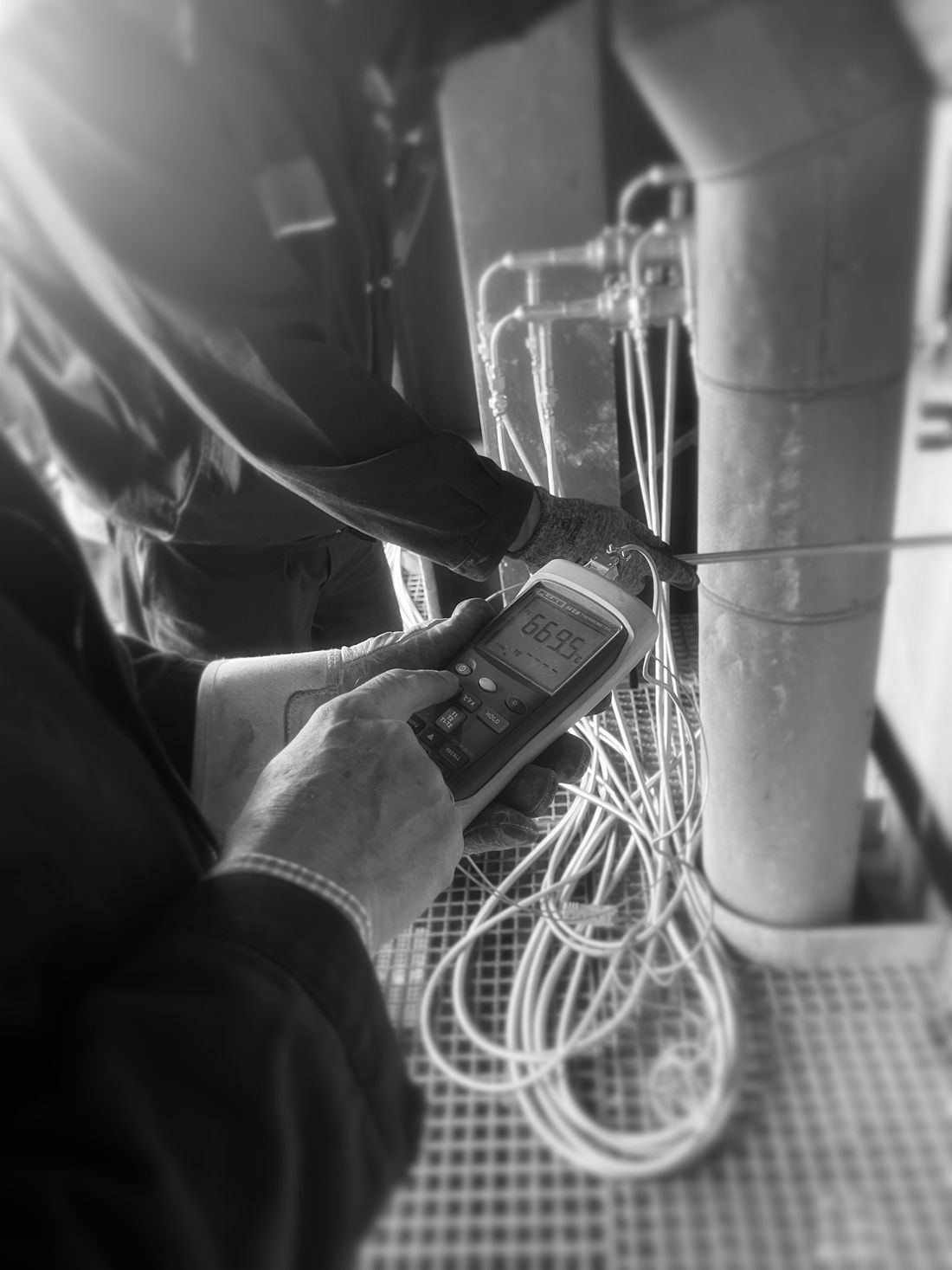
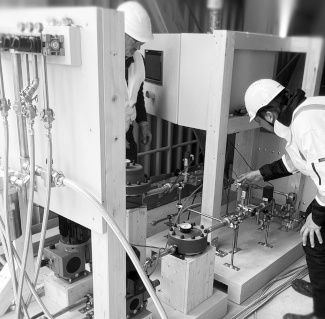
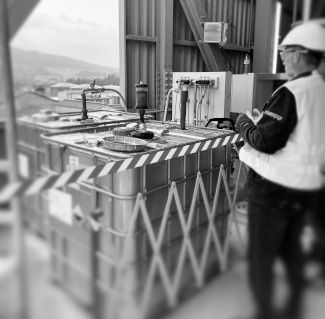
We implement SCID together
No off-the-shelf package: every project comes together with partners
Operator
provides the plant and decides after each phase.
DeNOx specialists
from industrial, boiler and plant engineering build the system – ideally your trusted partners.
Additive partner
supplies the process additive eqinox throughout Europe.
DyCarnica
contributes the process and coordinates everything technically.
Looking for pilot partners
For the first stationary long-term operation, we are looking for operators across Europe. The pilot unit is designed for regular operation and can remain in place afterwards.
How it works
Initial consultation
Is SCID a fit for your plant in principle?
Technical pre-assessment
A first technical assessment based on your plant data.
Feasibility study
Site visit, computation, simulation & design, cost estimate. Charged by effort, with a cost cap agreed in advance.
Decision
You decide whether and how to proceed.
Questions operators and authorities often ask
Which plants is SCID intended for?
Who builds the system?
What is eqinox?
What does SCID cost?
Does SCID work in dust-laden flue gas?
Is SCID already in long-term operation?
Is SCID an option for new plants?
What does the INCITE listing mean?
More detail when you need it
The working principle, a comparison of the processes and the measurement data are covered in the documents.
Karin Koglbauer MA, MBA
After studying business at FH Wien and completing an MBA in innovation and product management at LIMAK Linz, I entered industrial plant engineering from outside the field. There I worked on the operational limits of SNCR and the chemistry of NOx reduction, which step by step led to SCID.
The development is based on my own reaction model of nitrogen chemistry in flue gas. It showed where denitrification can be triggered in a targeted way – and why it does not necessarily need high temperatures to do so. In 2024, SCID was tested at industrial scale.
DyCarnica is my consultancy for technical innovation and industrial sustainability, founded in 2014. I support operators who want to reduce emissions while keeping process stability and economics in view.
Is SCID right for your plant?
We can clarify that in an initial consultation. Write to me – I will get back to you.