Rethinking
DeNOₓ Technology.

Selective Chemically Induced Denitrification (SCID) combines the simplicity of SNCR with a significantly higher NOₓ reduction performance at SCR level — fully effective in the flue gas and without the need for a solid catalyst.

  • Up to twice the NOₓ reduction

  • 50% less ammonia consumption

  • No solid catalyst required

  • Fast, plant-specific implementation

THE LIMITS OF ESTABLISHED SYSTEMS

Does any of this sound familiar?

RETHINKING DeNOₓ

Your Perspective,
my Drive.

As simple to operate as SNCR.
As powerful as SCR.

Turn a Pilot Project into a Strategic Advantage

For operators who think ahead: For the first time in decades, there is an opportunity not just to optimize in the short term, but to actively leverage regulatory flexibility, while keeping the core process as adaptable as possible.

01

Dedicated regulatory framework for emerging technologies

As part of an SCID pilot project, regulatory authorities assess the installation with explicit consideration of its innovative and experimental nature.
The novelty of the technology alone does not constitute grounds for rejection; instead, it enables a technically guided approval process with extended regulatory flexibility.

02

Significantly extended implementation and trial period

Directive 2010/75/EU is to be transposed into national law by July 1, 2026. It provides for an extended trial period of up to 30 months for emerging technologies.
In addition, regulatory exemptions may be granted to allow pilot operation under practical, safe conditions — without unnecessary pressure for immediate full-scale retrofitting.

03

An eligible emerging technology with long-term value

SCID meets the criteria of a funding-eligible future technology. The equipment installed within the pilot project is not a temporary setup, but can continue to operate as a permanent installation and be fully integrated into the plant concept.
As a result, potential retrofit costs at the boiler level can be reassessed under a new economic perspective.

The New DeNOₓ Process Explained

SELECTIVE CHEMICALLY
INDUCED DENITRIFICATION

Selective Chemically Induced Denitrification (SCID) is the result of many years of hands-on experience in industrial denitrification combined with a rigorous scientific analysis of the underlying reaction mechanisms and flue-gas reaction kinetics.

SCID is a newly developed DeNOₓ process designed for the effective reduction of nitrogen oxides (NOₓ) in industrial combustion systems. The technology operates entirely in the flue gas, does not require a solid catalyst, and can be integrated directly into existing installations — such as cement kilns, waste-to-energy plants, or biomass-fired systems.

The process combines the ease of integration associated with SNCR with a significantly higher NOₓ reduction performance previously achievable only with catalytic systems. Unlike conventional approaches, ammonia in the SCID process is not activated purely by temperature, but through targeted chemical activation. This enables effective NOₓ reduction already within a mid-temperature range of approximately 600–780 °C.

Activation is achieved through the simultaneous injection of ammonia and a plant-specific, precisely tailored additive. Within the process, this additive forms a temporary gaseous catalyst that renders the ammonia reactive and enables the selective conversion of NOₓ into nitrogen and water. After the reaction, the catalyst fully decomposes — leaving no residues in the system.

In addition, SCID makes use of residual ammonia already present in the flue gas, reduces ammonia slip, and thereby improves the overall performance of flue gas treatment.

Want to see the invisible?

We believe what we can see — and demonstrate.

The Underlying Reaction Principle

DeNOₓ Systems Compared

Proof of Concept

Initial Feedback

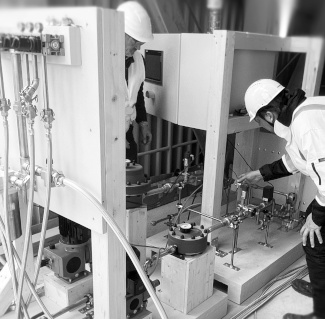
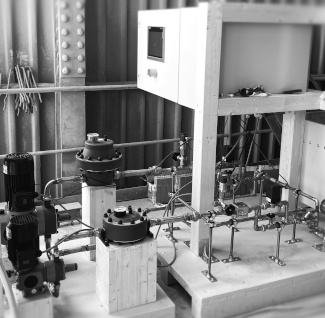
In einer großtechnischen Demonstration an einem Zementofen mit mobiler SCID-Einheit wurde die Leistungsfähigkeit im Vergleich zur bestehenden SNCR deutlich bestätigt:

“I honestly didn’t expect SCID to handle that much dust so well. When you hear ‘gas-phase catalyst,’ your first thought is usually: this is going to be complicated. But in practice, the dust actually supported the denitrification process — that was a real surprise.”

“At first, I was genuinely unsure whether it would perform in the field the way it does on paper. But in less than three minutes, the SCID effect was clearly visible. When I saw the measurement data, my reaction was simply: wow — this actually works.”

Where others reach their limits, my work begins.

I am Karin Koglbauer

I’m a management consultant specializing in technical innovation and industrial sustainability and the developer of SCID.
For more than a decade, I’ve been working on NOₓ reduction in real-world industrial operations: environments where temperatures fluctuate, processes are dynamic, and conventional systems reach their limits.

With a background in business studies at FH Wien and an MBA in Innovation and Product Management from LIMAK Linz, I entered industrial plant engineering from an unconventional angle. That path led to an in-depth engagement with the operational limitations of SNCR systems and the chemical–thermal mechanisms behind NOₓ reduction. Step by step, this work evolved into a new approach: Selective Chemically Induced Denitrification (SCID).

SCID is not a laboratory concept. It is the result of consistent, practice-driven development. A technology that rethinks DeNOₓ, applies chemistry with intent, and was successfully validated at full industrial scale in 2024.
Through DyCarnica, I support companies seeking to reduce emissions while maintaining process stability, efficiency, and economic viability, with solutions that are technically sound, economically robust, and free of unnecessary complexity.

My standard: NOₓ reduction that delivers. With solutions designed to last.

I’m Here to Answer Your Questions


SCID was developed for industrial combustion processes and can, in principle, be applied across all industries where NOₓ emissions occur in the flue gas. A key factor is the use of a plant-specific additive, precisely tailored to the flue gas composition, operating conditions, and system configuration.

Typical application areas include, among others:

  • Biomass-fired plants

  • Municipal and hazardous waste incineration facilities

  • Cement and lime production

  • Power generation and energy plants

  • Industrial furnaces and thermal processes

Whether SCID is suitable for a specific installation is assessed on a plant-by-plant basis as part of a dedicated feasibility study.


SCID is not delivered as a closed, off-the-shelf system. It is implemented on a project-specific basis.

Plant construction and installation are carried out by industrial, boiler, or plant engineering partners selected and contracted by the operator. This approach preserves full flexibility in supplier selection and allows existing framework agreements, preferred vendors, and internal standards to remain in place.

DyCarnica ensures that:

  • the SCID concept is correctly integrated into the existing or new plant,

  • all involved disciplines are technically aligned, and

  • implementation complies with the applicable pilot or permitting framework.

The SCID additive is supplied within pilot projects by a specialized partner company and is designed specifically for each plant. Selection, application, and ongoing optimization are carried out in close coordination with DyCarnica.

DyCarnica supports SCID projects as a management consultancy using an ECPM approach (Engineering, Construction & Procurement Management). Plant construction and the procurement of technical components are carried out directly by the operator or by suppliers contracted by the operator.

DyCarnica’s services are delivered on a project-specific, modular, and phase-based basis. Engagement takes place in clearly defined project phases at fixed prices. Each phase delivers clearly specified, verifiable results and can be concluded without any obligation to proceed further. This ensures a high level of cost predictability, transparency, and compliance with public procurement requirements.

The feasibility study, including an on-site assessment, typically constitutes the first project phase and is offered at a fixed price of EUR 22,500, plus a flat-rate travel expense allowance.

Capital investment costs for a new SCID installation are typically in a comparable range to conventional SNCR solutions. For retrofit projects, costs depend on the existing plant configuration and on any modifications required to the boiler and auxiliary equipment.

The SCID additive is supplied through a partner company within the framework of a pilot project and is tailored to the specific plant. An economic assessment of this cost component is an integral part of the feasibility study.


Initial full-scale industrial testing indicates that alkaline dust does not inhibit the SCID denitrification reaction. On the contrary, it may even support the catalytic effect of the additive.

Yes. Depending on the plant configuration, combining SCID with an existing or planned SCR system can offer clear advantages. By applying SCID as an upstream NOₓ reduction step, the NOₓ load entering the SCR can be selectively reduced.

This can result in, among other effects:

  • increased achievable production rates or operating load,

  • reduced catalyst volume requirements or smaller catalyst design,

  • extended catalyst lifetime and reduced wear on existing catalyst layers.

Whether and to what extent these effects can be realized depends on the specific installation and is evaluated on a plant-specific basis as part of the feasibility assessment.

No. To date, SCID has not yet been implemented as a permanent full-scale installation.

SCID is currently classified as TRL 6 (Technology Readiness Level).

The underlying reaction principle has been successfully demonstrated at large industrial scale under realistic operating conditions using mobile SCID units. Functionality, performance, and scalability have been validated.

The transition to TRL 7 — operation as a stationary system in continuous industrial service — is the focus of ongoing and planned pilot projects. Full commercial deployment (TRL 8–9) is intended only after successful completion of this phase.

In principle, SCID — like any denitrification system — can be optimally designed and integrated during the planning of new installations. However, in the current pilot phase, implementing SCID as a fully deployed solution at a very early planning or construction stage involves elevated risk.

A more robust approach is to take the insights gained from the pilot phase into account during boiler design and flue gas routing. This allows constructive provisions to be made that enable a later transition to SCID in a technically straightforward and economically efficient manner — without unnecessarily constraining today’s design decisions.

This keeps new installations future-ready and flexible, while allowing regulatory and technological developments to be observed and addressed deliberately.

For Those
Who Want to Move
from Insight to Implementation.

If you’ve made it this far and still have unanswered questions, feel free to send me an email. I’m glad to take a closer look together.

innovation@dy-carnica.com

Let’s Talk about SCID!

Curious about the latest advancements in Selective Chemically Induced Denitrification? 

Connect with us for a free assessment of your needs and learn how SCID can make a difference!